The Moss Manual / Taxon entry
Taxiphyllum cf. alternans
Taiwan moss
Taiwan Moss is a delicate, creeping to weakly ascending aquatic moss with elongated stems, irregular branching and finely tapered foliage. Its overlapping leaves create a loose, feathery appearance rather than tightly flattened fronds. Commonly traded as Taxiphyllum alternans, its precise taxonomic identity remains uncertain.
Taxiphyllum
Hypnacaea
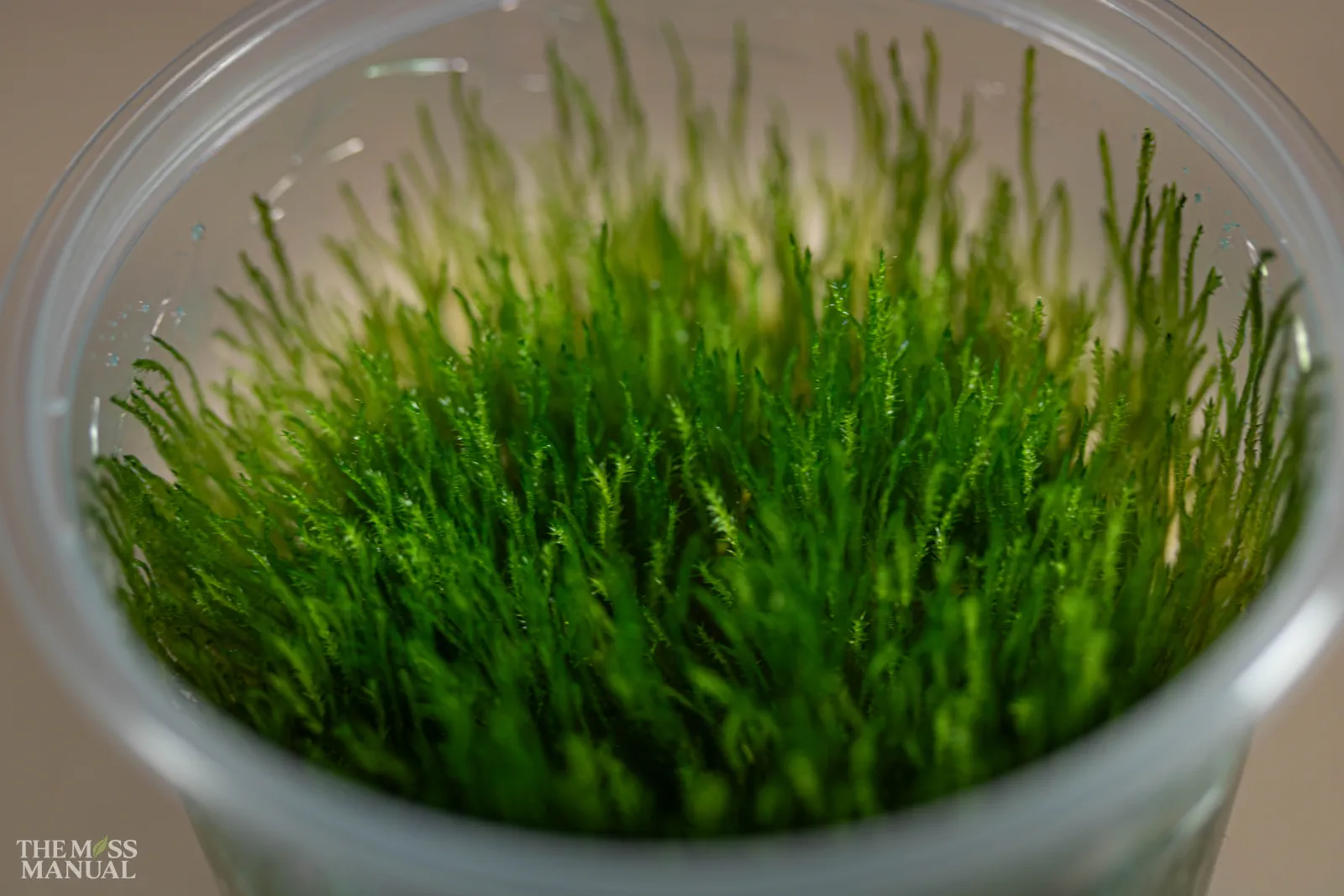
Colony photograph
Image to be added
T. alternans 'Taiwan' in-vitro (tissue culture).
Greg Walker
View original colony photograph ↗01 / What you’ll see
At a glance
Taiwan Moss is a delicate, fine-leaved moss with a loose, feathery appearance. Its long, slender stems grow outward or gently upward, producing irregular side branches that give the plant a somewhat layered appearance. Unlike mosses that form distinctly flattened, symmetrical fronds, Taiwan Moss has a more relaxed, three-dimensional growth pattern.
The leaves are narrow, finely pointed and overlap along the stems, giving individual shoots a soft, tapered appearance. Branches may alternate along the main stem, occasionally creating a loose, Christmas tree-like shape. However, this branching is less regular than that typically associated with Christmas Moss (Vesicularia montagnei).
Growth can vary considerably depending on cultivation conditions. Tissue cultured specimens appear to favour an even finer foliage, with minimal branching.
Growth habit
Creeping to weakly ascending, with elongated, dominant primary stems and a loosely spreading growth form.
Growth environment
Submerged and Emersed
Texture & density
Fine-textured, with delicate, overlapping foliage forming a loose, feathery appearance. Density varies with cultivation conditions; tissue-cultured specimens may exhibit tightly packed, upright growth.
Branch geometry
Irregular lateral branching, with branches appearing alternately along elongated primary stems. Occasional pseudo-dichotomous branching produces a loosely spreading, asymmetrical structure.
Leaf posture
Leaves are narrowly ovate to lanceolate, tapering gradually towards elongated, acuminate apices. They are held obliquely relative to the stem rather than forming a strictly flattened, two-dimensional arrangement. Young shoot tips may display particularly tight, regular leaf arrangement.
02 / Conditions in cultivation
Parameters
Cultivation guidance from the documented observations; see the notes for context.
Temperature
16
–
25
°C
pH
6
–
8
GH
2
–
10
°dGH
KH
1
–
6
°dKH
Lighting
Low to moderate
CO₂
Optional
Flow
Gentle to moderate
Parameters provided reflect commonly accepted cultivation ranges for Taxiphyllum in the aquarium hobby. Species-specific experimental data supporting these ranges could not be located.
03 / In the glass box
Cultivation & care
Taiwan Moss is a relatively adaptable aquarium moss that can be maintained in submerged conditions without particularly elaborate equipment. Supplemental CO₂ is not considered essential, although it may encourage more vigorous growth when lighting and nutrient availability are adequate.
For aquascaping, small portions can be secured to driftwood, stone or other aquarium decorations using thread, fine mesh or a small amount of aquarium-safe cyanoacrylate adhesive. Distributing the moss in thin layers rather than thick clumps helps maintain water circulation through the growth.
Gentle to moderate water movement is a sensible starting point, particularly where dense growth may otherwise trap suspended debris. Excessive detritus accumulation can be managed with careful siphoning or gentle agitation during routine maintenance.
Regular trimming can help control spreading growth and prevent older portions from becoming shaded beneath newer foliage. Removed shoots may be used for propagation by attaching healthy fragments to additional surfaces.
As with many aquarium mosses, stable conditions and consistent maintenance are generally more useful than chasing precise water chemistry values.
04 / Under the microscope
The Nerdery
Important, because it isn’t easy to find elsewhere.
Microscopy
The in-vitro specimen exhibits slender, tapered shoots with a predominantly upright growth habit, potentially influenced by crowding. Observations are provisional pending examination and photography of mature submerged growth.
Frond microscopy
Image to be added
Leaf microscopy
Image to be added
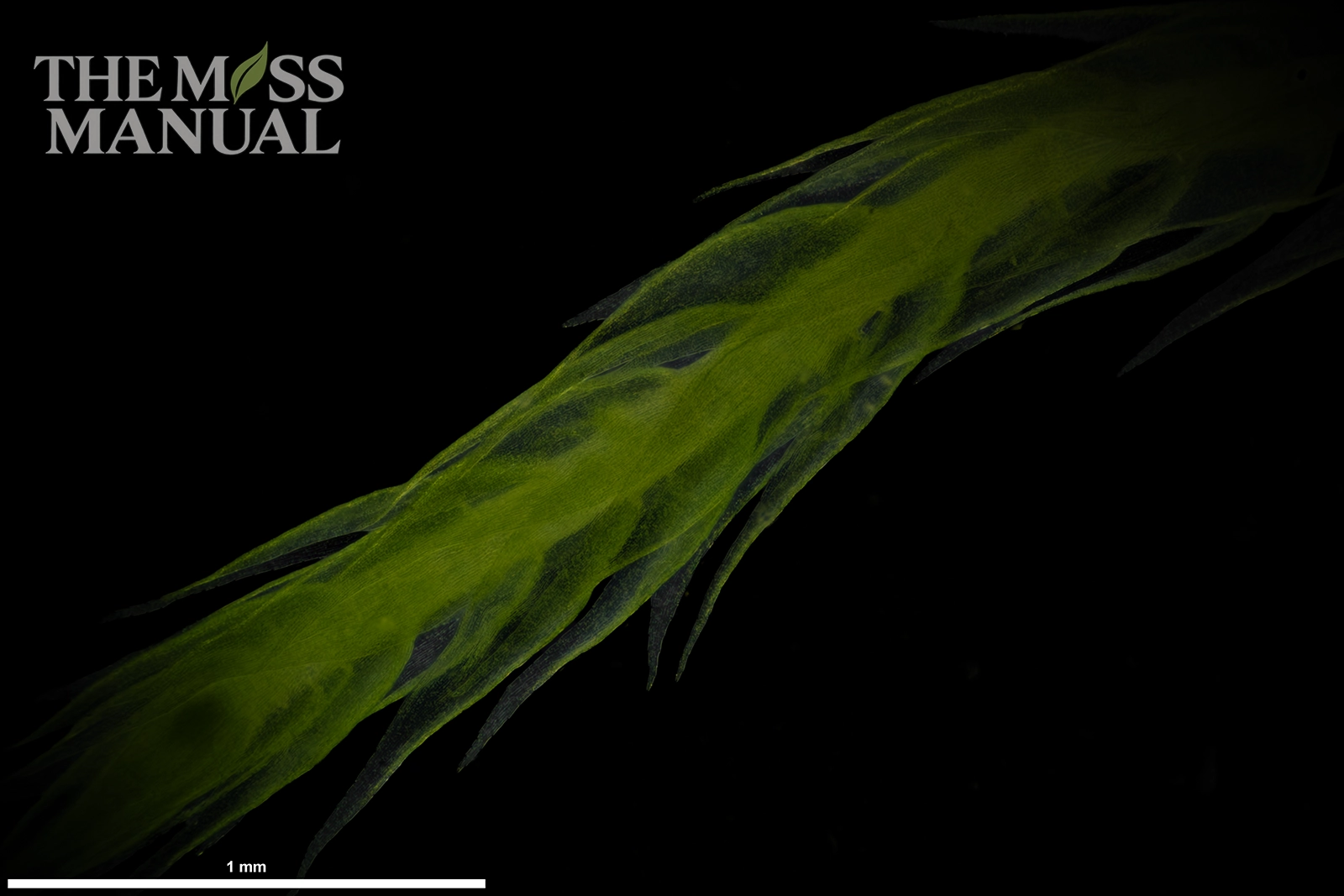
Microscopy reveals alternately arranged, narrowly ovate to lanceolate leaves, held obliquely along slender shoots. Juvenile shoot tips occasionally exhibit a near-distichous arrangement, although the foliage does not form consistently flattened, planar ranks.
No distinct costa was observed in either the hobbyist-grown or tissue-cultured material, suggesting ecostate leaves. Laminal cells appear elongate and longitudinally aligned, with basal cells transitioning gradually into the lamina and no conspicuously differentiated or inflated alar group.
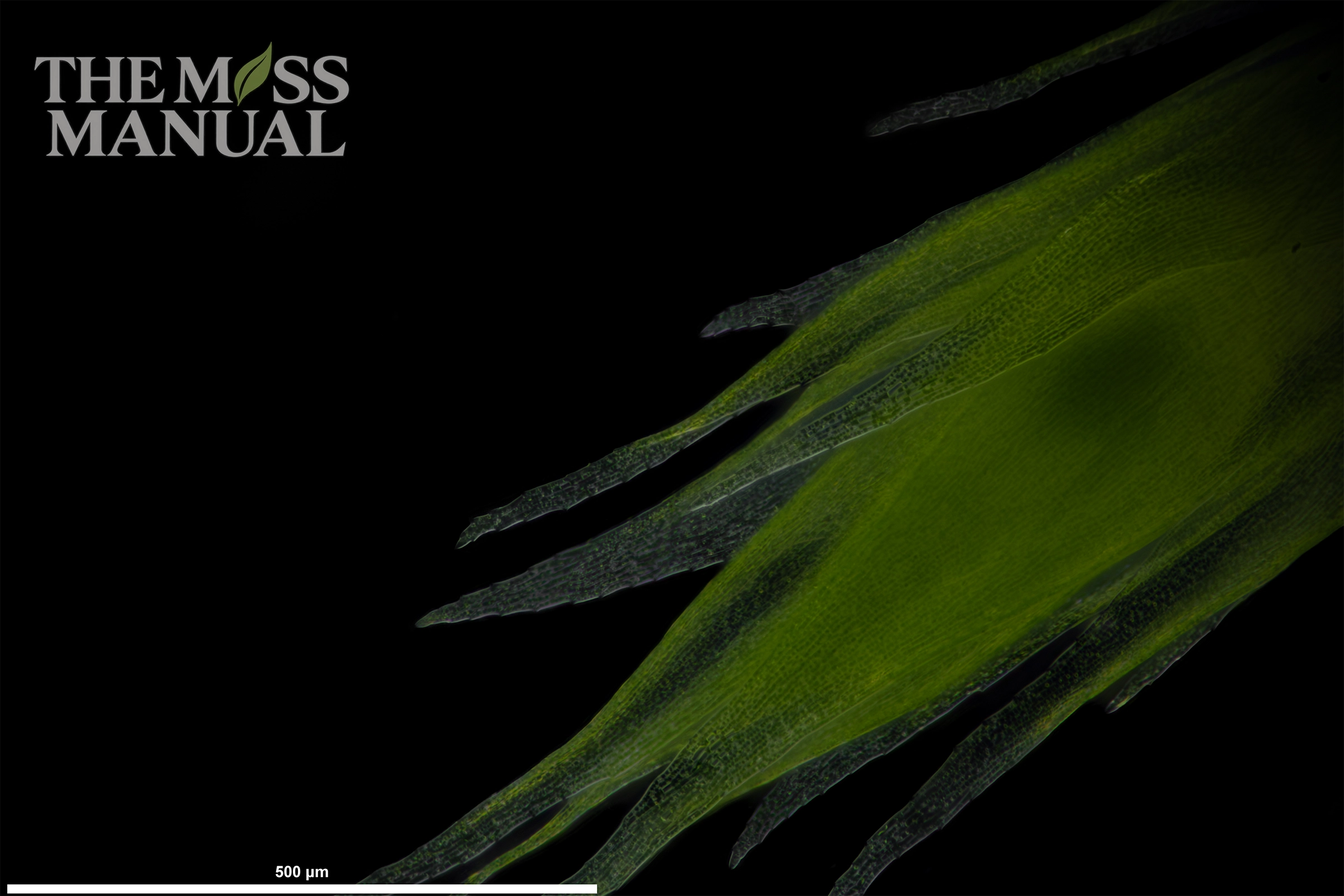
Branching is irregular, with occasional pseudo-dichotomous divisions. The tissue-cultured specimen exhibits densely crowded, predominantly upright shoots, potentially reflecting its restricted growing conditions rather than the mature submerged growth habit.
This combination of slender, tapering foliage, irregular branching and weakly differentiated basal cells is compatible with Taxiphyllum, but does not conclusively establish T. alternans. The author therefore recommends the provisional designation Taxiphyllum cf. alternans ‘Taiwan’, pending further taxonomic examination.
Leaf arrangement
Leaves alternately arranged, held obliquely to the stem. Juvenile tips exhibit near-distichous arrangement.
Leaf shape
Leaves narrowly ovate to lanceolate, tapering gradually to acute apices, with slight outward curvature near the tips.
Costa
Absent
Cell notes
Laminal cells elongate and narrowly rectangular, aligned longitudinally. Basal cells transition gradually into the lamina, with no clearly differentiated or inflated alar cell group observed.
05 / Current assessment
Nerd Verdict
High
The author provisionally identifies this specimen as Taxiphyllum cf. alternans ‘Taiwan’. The assessment combines its creeping to weakly ascending habit, irregular alternating branches, narrowly ovate to lanceolate leaves, absent or vestigial costa, and lack of distinctly differentiated alar cells. Morphology is consistent with the supplied identification, although species-level certainty remains limited. Further examination of mature submerged growth is warranted.
Taiwan Moss is frequently confused with Christmas Moss in the aquarium hobby, despite their differing taxonomic identities. True Christmas Moss is generally identified as Vesicularia montagnei, a separate genus within the family Hypnaceae.
How identifications are assessed
Identifications are assessed against biological reports and taxonomic descriptions, alongside specimen observations and microscopy. Sources are provided where possible. Independent verification is explicitly flagged where available.
Identification status
Confident ID (non-peer reviewed)
Independent verification
No
06 / Evidence & attribution
References & record updates
Bryological data on T. alternans is quite sparse, and what little of it that's available tends to focus on the emersed growth form, which is drastically different to the submerged form. Identifications are based on inference and cross-species examination, and care instructions are based on common hobby knowledge.