The Moss Manual

An independent reference · hosted by Niskai Aquatics

A field guide to the things we call moss

The Moss Manual

Names on bags.
Evidence under glass.

Mosses, liverworts and enthusiastic impostors from the aquarium, aquascaping and terrarium hobbies. Documented through original photography, microscopy and time spent watching them grow.

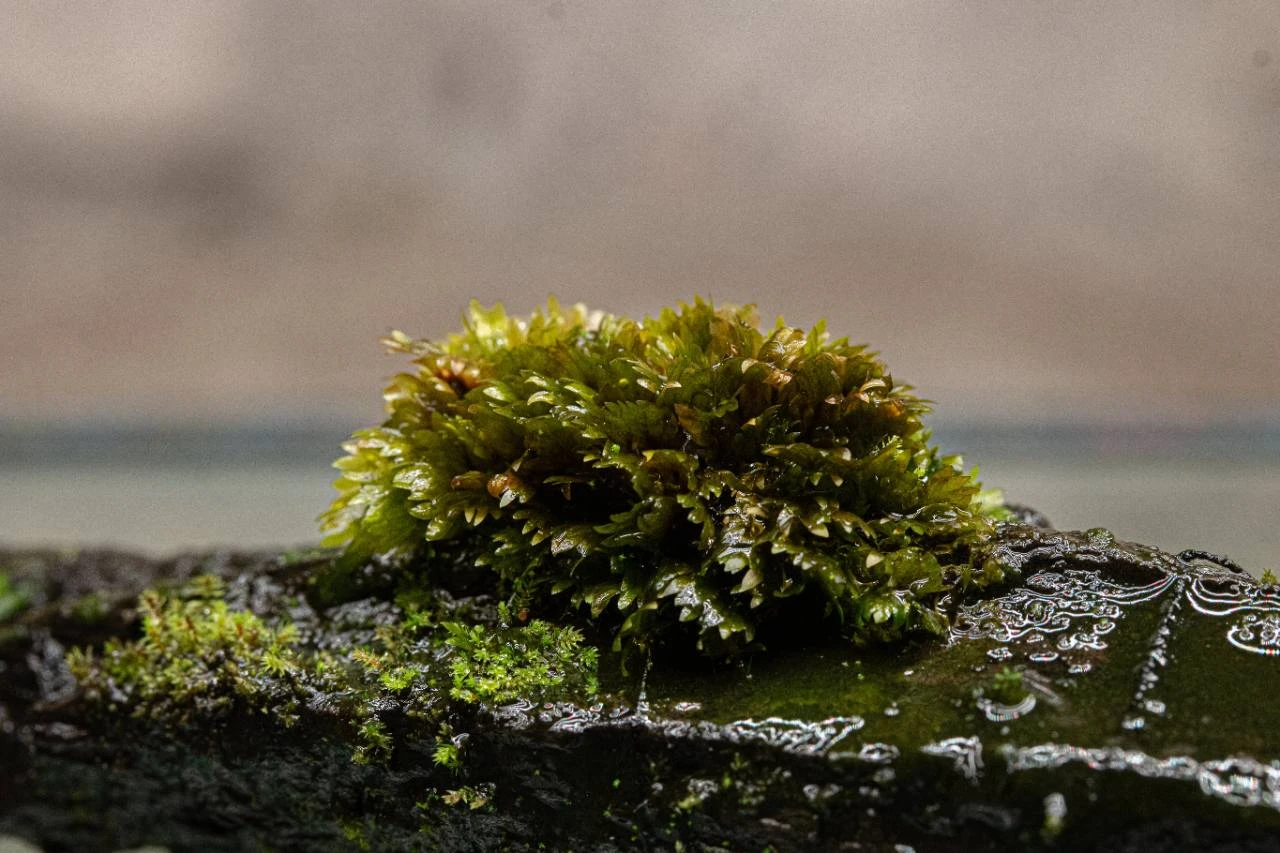
A dense green moss colony growing on wet wood, supplied as F. Miroshaki
F. Miroshaki · a colony, before the microscope.

01 / The collection

Find the name you know.

Then follow the evidence.

The catalogue connects scientific names, synonyms and trade names with illustrated taxon entries. Search any of them in one place, then narrow the collection by genus or growth environment.

Search the catalogue

Search by name…

Press Enter or select Search to view matching entries in the catalogue. Filter by genus or growth environment there.

Start with the features.

A familiar name is a starting point. Each entry brings together growth observations, close-up photography and the diagnostic details behind its identification.

Open the catalogue →

02 / A word from Greg

Greg Walker
Project lead

Foreword — On Moss, Mislabelling, and Mild Heresy

This manual exists because the aquarium hobby has a moss problem.

Specifically: everything green, soft, and vaguely fuzzy gets sold as “moss.”
At the same time, many genuinely similar mosses — at least at a macroscopic level — get sold under entirely different names, depending on who’s holding the bag that day.

Read the full foreword

Even large, established companies are guilty of this.
Java moss (Taxiphyllum barbieri) sold as Fontinalis is not an edge case — it’s depressingly common. And this confusion pervades every corner of the hobby.

The number of times I’ve seen a blurry forum photo captioned “What moss is this?”, followed by twenty confident answers — all different, and often all wrong — is… impressive, in the worst possible way.

Some of the organisms documented here are true mosses (Bryophyta).
Some are liverworts.
Some are… enthusiastic impostors.

And here’s the uncomfortable truth: that distinction usually means jack to the everyday aquarist.

What does matter is how these organisms grow, attach, spread, behave underwater, and respond to light, trimming, flow, and time. Those traits determine whether something becomes a lush accent, a maintenance nightmare, or a slow-motion green crime scene.

This manual does not attempt to “correct” the hobby by force.
Instead, it documents plants as they are encountered, as they are sold, and as they actually behave — with microscopy used as a tool for clarification, not gatekeeping.

(That said, I will use it to call out cases where “rare moss” conveniently appears right after the price tag triples.)

In short: if it’s sold as a moss, it belongs here. If we've ID'd it with a high degree of certainty, it will be here.

Taxonomy is treated seriously — but never at the expense of simplicity, practicality, or the realities of a glass box full of water.

03 / Beyond the profile

A little help with the nerdery.

Supporting notes for looking closer, making sense of the terminology and recording what you find.

A–Z

The glossary

Plain-language explanations of botanical terms, with linked definitions throughout the Manual.

In preparation

01

Equipment & methods

Microscopes, preparation, photography and the practical business of getting a useful look.

In preparation

02

Notes from the bench

Cultivation observations, comparisons and the extra details that don’t fit neatly into a profile.

In preparation

Explore resources →

Try a glossary note

Look for a costa, compare pinnate branching, and note whether the leaves are appressed.

Hover or focus a dotted term for a definition. On touchscreens, tap once to peek and again to open the full note.

Mosses Greg needs — view the wanted list →

Submissions & requests

Got mosses to submit? Got something you want identified? Got complaints or hate mail? Shoot us a line

mossmanual@niskai-aquatics.com

04 / About the project

Document the organism.
Question the label.

The Moss Manual is an independent educational reference project led by Greg Walker, with particular attention to the organisms encountered in Australian aquarium, aquascaping and terrarium hobbies.

Original specimen photography, microscopy, cultivation observations and taxonomic research form the basis of each entry. Assessments can change as the evidence develops.

Hosted within Niskai Aquatics, the project retains its own identity and editorial independence. It is freely accessible, without advertising, affiliate links, product listings or paid access.

Identifications in The Moss Manual are based on specimen observations and microscopy assessed against biological reports and taxonomic descriptions. Supporting sources are provided where possible. Independent verification is explicitly flagged where available; a cited source alone does not mean a specimen has been independently verified.

Keep the microscope running

A freely accessible field guide.

Voluntary contributions will help support photography, microscopy and ongoing research. Support is optional; the Manual remains free to read.